Linux vs Other Operating Systems : 7 common myths busted

By fossmaniac
Introduction
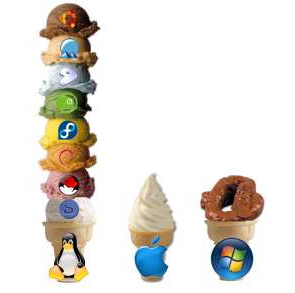
When it comes to operating systems people have always looked up to Windows and Mac OS X as the front-runners of the OS battle. However, due to recent efforts of the ever-growing Linux community, this scenario has changed only to accommodate Linux as a beleaguered underdog. Thanks to its escalating popularity amongst desktop users worldwide, the open source operating system has already been deemed as a serious competitor to Windows and Mac OS X . Similarly on the server side, many corporations are switching to Linux due to its reliability and speed. So then, what is it that makes Linux so special when contrasted with other OS’s namely Windows and Macs? Why are many people switching to an operating system that is not only free but is not even backed by any multi-million dollar corporation? This article answers many such questions.
Why not Windows or Macs?
Ok, let us tackle the problems with Windows and Macs first. Windows, developed by Microsoft Corporation, is the Operating System with the largest market share. However, this doesn’t make it the best when it comes to quality and consistency as it is constantly marred with problems of viruses and malware. Also, the initial investment in a Windows PC is much higher than what a consumer expects to pay. First it is the cost of the hardware itself, then the cost of the license to run Windows, then an Office program, and finally to protect it all, a decent antivirus software. In short, the license may carry an affordable price tag but the expenses finally pile up to burn a large hole in the consumer's pocket. As for computers that come with Windows pre-installed, the cost of antivirus, Office utilities and other non-free programs usually overrides the buyer's budget. Furthermore, the version of Windows provided is usually Home or Business edition, which lacks many features the Ultimate version provides.
Coming to Macintosh computers, they, unlike Microsoft, prefer to sell their software bundled with their own hardware. Apple claims that their design, feature-set and stability are much superior to any of Microsoft products; even if it comes at a very high price point. Nevertheless, Macs, despite their holier-than-thou attitude towards Windows and Linux, are far from being the perfect computers. Consumers and Microsoft employees frequently complain that Macs are significantly overpriced than a normal laptop/PC. Apple does have many quality programs for its users but most of them are highly priced and are not open source. Furthermore, Apple has gained notoriety for making closed, locked-down Mac exclusive products thus creating a walled garden of their own.
Note: The points mentioned above are not intended to offend any Windows or Mac lovers. I'm merely pointing out that Windows and Macs, contrary to popular belief and marketing claims, are far from being perfect and flawless products.
Why Linux?
After pointing out all the downsides of Windows and Macs, I come to the main point, that is, why should anyone switch to Linux. We all know that it is for geeks, don't we? Besides, how good can an OS be if it completely free and open source? Let's tackle all these questions one by one.
Myth 1: Linux is just for geeks
Linux is for everyone. While Linux based distributions like Ubuntu, Linux Mint and Fedora are developed with the non-technical user in mind, Slackware and others appeal to the more geeky ones. Believe it or not, installing Ubuntu is actually easier than a Windows installation , and using it requires no special skills.
Myth 2 : Linux can’t handle Excel, Word, Powerpoint
Linux can handle all the major file formats when it comes to documents as it comes with a powerful opensource Office suite called Openoffice.org (soon to be replaced by Libreoffice). So, apart from doing all the spreadsheets, presentations, and word processing out of the box, Linux can do tasks like publishing, image editing using only free and open source applications.
Myth 3 : Linux is free, so it sucks.
Many people think that Linux, because it is free, cannot be considered as a 'product', and thus, it may not be as good as Windows and Macs. This belief however, is completely wrong. Linux is the result of contributions by millions of users from all around the world, and it is through their incessant efforts that Linux continues to be free. Besides, what’s bad about being free anyway? After all, the best things in life are free; aren’t they?
Myth 4 : Desktops are dead, so is Linux
With the rapid emergence of smartphones, tablets and a myriad of handheld devices running powerful softwares, the popularity of desktops is slowly falling. However, this process is slow, and many have denied the fact that desktops will get replaced by devices like tablets; at least for the next 5 years. Whichever way the paradigm shifts, Linux enthusiasts won't be disappointed as almost all the next-gen gadgets being developed are already capable of running Linux. Consider for example, Android smartphones which are rapidly overtaking Apple's iphones; these devices are running on Android Operating System which is based on … yes, you guessed it right … Linux. Also when it comes to tablets, Android powered tablets have started appearing in the market ready to take on Apple's ipad. Finally, with the steady growth of Linux based netbooks, one can without any doubt, conclude that whatever happens to desktops, Linux isn't dead or dying; it is in fact, the future.
Myth 5 : But Linux can’t handle my favorite software XYZ which is windows-only.
Linux maybe not be capable of running a particular program like Photoshop, but it does have an opensource alternative with equivalent features called Gimp. Many such closed-source programs exist to which Linux provides great open source alternatives. A good way to find those is through this site which provides a list of quality alternatives to many leading applications. Furthermore, a popular software called Wine makes it possible for Linux users to run many Windows programs without any virtualization or emulation. If that too, doesn't suit the user, he or she can always try dual booting which many Linux users do.
Myth 6 : Linux can’t do gaming
Windows, unlike Linux and Macs can always boast of the thousands of games it is capable of running. However, that doesn't mean gaming is an Utopian concept to the Linux world. Many indie developers have started developing games for Linux , and of course many games that run on Windows work flawlessly on Linux thanks to softwares like Wine, PlayonLinux and Transgaming Cedega. Here’s a list of the much-awaited games for Linux in 2011.
Myth 7 : Linux lacks support.
While Microsoft and Apple both boast of an excellent support, Linux, by default doesn't offer any professional support. To make up for the lack of support, Linux offers multiple ways of seeking help; one such way is through forums .The Linux community is very large and simply posing a question in a forum, one gets a reply within a few minutes and sometimes seconds. Don't believe me? Try asking a valid, Linux related question on linuxquestions.org and a helpful reply will come quicker than you expect. For the impatient ones, there is IRC; that is, internet relay chat, where many developers and users hang out to helping other users. If that isn't adequate, one can always buy professional support offered by Ubuntu, which comes at a fair and reasonable price.
Conclusion
Summing up, Linux in almost all aspects matches up to its closest competitors and in some areas outstrips them hands down. That said, Linux’s market share still stands at a meager 2% thanks to widespread vendor lock-ins and a general lack of awareness amongst non-technical folk. This fallacy however, is slowly being overcome only to make the software world a free and better place.
Check out my other articles
Comments
@CiscoPixie Glad you liked the article! Thanks a lot.
"Linux lacks support". Unless you pay $250 for a BOXED version of Windows, it doesn't come with support either. The closest you get is support from the hardware manufacturer, but I've yet to see a hardware manufacturer that had any software solutions besides "reinstall the driver" or "reinstall windows".
for $250 you can get 2 1/2 years of support (http://www.canonical.com/enterprise-services/ubunt That's longer than your hardware manufacturer will give you and longer than you'd probably get from Microsoft if you purchased a second copy of Windows in a box.
Sorry, link got truncated :(
Hello
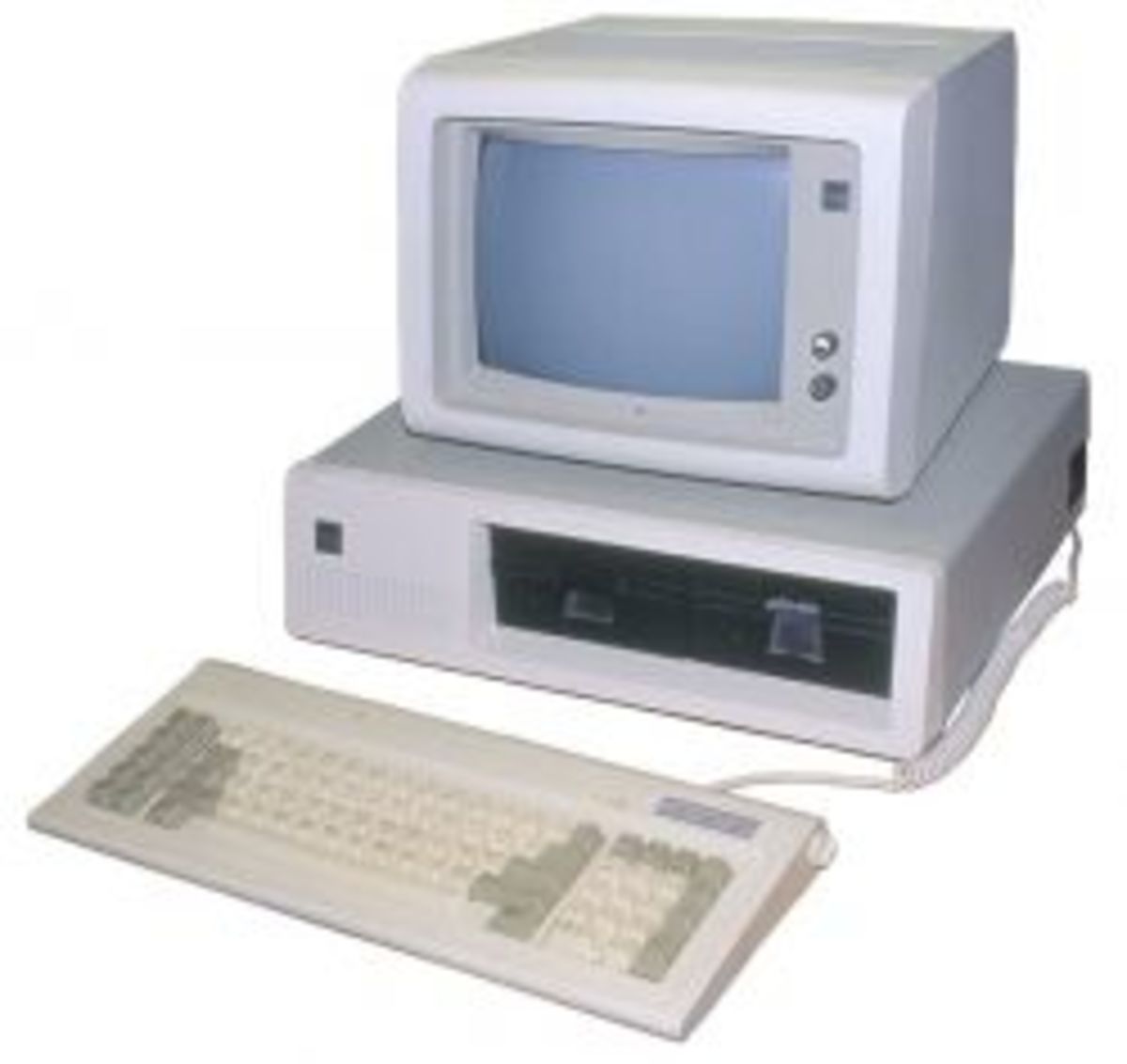
As long as Terminal exists Reminds me of DOS!!!! Linux will always be second best. All programs must I repeat must be able to be installed via Package Manager, I speak as a "New Boy" only been using Linux for a year. To me XP was the high point of Microsoft Linux to my mind beats Windows 7 hands down.
Regards
KRM
Windows Update: Linux
Linux was offered as DOS2 at the college I went to. The Mac class was discontinued because the college thought we would never have to work on a Mac. Ever since I updated my Windows to Linux it has worked a let better. No nagging icon to get anti-virus; No nagging icon telling me that I only have so many days to register my operating system.
I use linux on server (very flexible because you can made all from command line interface) and I like use windows on my working PC. In any case I very glad that Microsoft get real competitors in DeskTop OS business.
I have used Ubuntu for a few years, most recently on Windows 7 machines in dual boot configuration, and while I rely on Windows 7 for work, I rely on Linux for get in, get out, make it happen tasks. I am upgrading the 11.04 as I write, and have high hopes: I would like to switch entirely to Linux, even on our newer machines. Our older machines all run Linux. Never throw away a computer that works... just put Linux on it and watch what happens.
excellent article. Couldn't agree with you more. Who needs windows and especially OS x when there's linux?
You are actually spreading some common myths about Linux. First, you say "That said, Linux’s market share still stands at a meager 2%..." That's a false statement no matter how you define market share. Depending on who you believe Linux stands somewhere between 35-40% of the server market, with Linux plus UNIX holding the majority since 1999. On the desktop the 2% number is much lower than even Microsoft claims for Linux. See:
http://broadcast.oreilly.com/2010/09/debunking-the
http://en.wikipedia.org/wiki/Linux_adoption The actual number is probably still under 10%.
You state "Why are many people switching to an operating system that is not only free but is not even backed by any multi-million dollar corporation?" Linux isn't backed by any one multi-million dollar corporation but rather by many such corporations. Red Hat revenue is expect to eclipse $1 billion this year. Look at the Linux Foundation membership and corporate investment in Linux by companies like Intel, HP and IBM.
It seems like you've bought into some of the popular FUD about Linux as well.
I concur with Caitlyn.
Also, there's one thing that clearly says that Linux is for everyone and is backed up by big corporations. That is, almost every gadget can and many (if not most) of them run Linux. TVs, set top boxes, dvd players, navigators, network and storage equipment (switches, routers, wlan, authentication servers, NAS...). List goes on and on. From the pocket to the largest supercomputers and distributed systems (like CERN LHC).
It's funny how some people write "Linux sucks!!11oneone" and they don't realize that they're typically running (2-10 times) more Linux machines than Windows/Mac machines in their homes. Better yet, nowadays one can write "Linux sucks" and not realize that motherboard on that very machine has one preinstalled.
They also depend on Linux when they want to connect and do anything online.
The desktop? Yes, MS Windows has the largest market share. Apple Mac OS hasn't. So what?
Linux already can be found from the pockets of the youngest and the oldest, our homes, our cars, planes we fly in, boats we sail, services we use: everywhere.
Linux is hard to use? Enough! It's freaking transparent.
Everyone should just keep enjoying Linux and let MS and Apple argue what is the best OS. Comparing Linux to their products is just pointless.
Linux does not have 2% market share. Consider that every time someone buys a desktop or laptop that comes bundled with a copy of Windows that they didn't want, and installs Linux on top of it, it gets counted as a Windows installation rather than a Linux installation. I suspect that Linux has closer to 10% market share, but we have no way of knowing for sure.
Wrong on Myth 3: Linux is not Free (This is not a bad thing.)
Linux like all other OS's has the cost of learning. This is an expense of time. Learning the command line is an expensive endeavour but often worth it; for afterwards you can script many repetitive tasks and work more efficiently across slow networks. Same goes for learning Windows command line; however there is much to be desired from its lack of included command line tools. Command line tools change significantly less then their GUI counter parts over time.
Another cost to Linux is done by developers and testers which is also a cost of time but this is spent in debugging and developing a program. This cost is so much cheaper than Windows as there is much better help on forums for Linux vs. Windows or Macs.
"Linux like all other OS's has the cost of learning."
when people say that linux is free (as in price) they mean that you don't have to pay for a license. And that's true.
>>Linux has only 2 to 4 % market share, so, Linux sucks
Mercedes Benz only has 3 to 4 % market share, so Mercedes sucks
@Capitalist Pig Oook Oook - I see you've been caught up in some of the linux myths as well - since pretty much most distro's have a gui setup for the majority of funcitons. Those of us who use the command line do so as a preference because it's usually quicker and can get things done better once you do learn the command line.
For example - need to find what hardware is on your computer? usually about 6-10 clicks (regardless of o/s) to get to the window that lists your hardware - with command line it's a matter of click on the command line icon, type "lspci -v" and there's the list of your hardware.
"when people say that linux is free (as in price) they mean that you don't have to pay for a license. And that's true."
That is correct however most peoples' time is worth something.(enjoyment or money)
People buying a computer with Windows will say they got the license free with the computer. We know this is false but the perception is hard to fight.
People claim that they "already know Windows" and that there is no time cost involved with Windows. How often I hear that and learn that they really don't know Windows and in reality they get windows 7 issues and incompatibility issues with old apps and or devices. I would argue that time learning Linux is worth it and that there are less compatibility issues with Linux that don't get resolved by the developers of the apps that you learn to use in Linux. And that "their" argument of "not having to learn new stuff" would better fit in the Linux realm where user interfaces don't have to change as often. Although KDE 4 from KDE 3 was a bit of a shock and as I have read Gnome's new desktop is a bit of a shock as well. Since I always open terminals I seldom deal with desktop issues. And the biggest difference I noticed was when tar changed the options to untar a bzipped file.
@Ken
I think you may have miss-read my post. I was saying it is worth the expense of time to learn it. I prefer the command line. Especially Linux's command line. Grep in linux is a million times more powerful than Window's findstr. There is also head, tail, sed, awk, ... so many other powerful tools to make things easier for scripting. Also getting variables from commands into environment variables is also so much easier in Linux (in Windows batch I needed for loops to get variables from other command line tools). I learned the other day about a Linux command line tool that even found the make and model of the laptop I ran it on allowing for easily identifying all the hardware. Windows users had to look for the marker on the computer great if your at the computer but what if you are remote. Similar tools in windows do cost money and are not cheap nor scriptable like I can do with Linux.
I also know there is a GUI in Linux however Linux GUIs seem to suffer from the same fate as the Windows GUI. It often changes to the point that there is an expensive new learning cost associated. I recommend people spend the time and learn the command line and if they stick with Windows I recommend they learn its command line because even in Windows there are option only available via command line. In Windows I show how to edit the options for a file type and how it uses the Windows command line for these options. There are expenses in learning on all operating systems. Again I would argue that the learning costs on Linux are less than the learning costs of Windows. Static cost of a windows license is not a big consideration of most industries vers cost of training. Linux training is good for life vers Windows training is good till the next release. There are a few new things in linux requiring learning but not nearly as many it was already nearly complete as it is so Unix like.
I am new to windons, But have always been brought up with LINUCKS. My dad teach me LINUCKS from young age, teach me that computers can be fun! COOMPUTER does not compute. I was running redhat for Windons MSN sermah. Executable file is unnecessary.
The OS is personal choice of tool, not a religion. Linux distros have their share of problems which would be unfair to ignore. GNOME and KDE are absolutely shit window managers compared to the Windows or Mac equivalent. Open source has its major disadvantages and is rarely as good as it sounds on paper. Privacy and resulting security of source code cannot be ignored. Also, installing applications is still largely a pain on Linux systems and has a huge learning curve. (anybody who disputes is ignoring all the 'makefile' and what not) I for one love the UNIX derivative's terminal,but everybody doesn't. Please stop going all I'm-open-source-you-aren't.
@Angad
Oh dear. For each statement you make the equivalent can be made for closed source/Windows/Mac. Care to cite why Gnome/KDE are shit? Have you used them? In what way are they shit compared to Windows or OS X?
Care to list some disadvantages of open source? Privacy and security are more easily assured if the source code is open for everyone to see and assess. Closed source code can be riddled with security issues (Microsoft) and gather have all sorts of privacy concerns (Apple).
I'm not sure the last time you installed an application on a modern Linux distribution, but the "'makefile' and what not" that you ignorantly refer to is something that very rarely has to be done now and installing software is less painful than it is on Windows. Certainly installing the average Linux application in my experience is faster, works first time every time and doesn't regress some other application or require me to reboot my computer. At least with open source and Linux you have the option of compiling the code yourself using 'makefiles' and what not, so that your code can be as efficient as possible for the hardware it's running on. You don't get that with Windows/Mac. You get code compiled that's most likely to work for everyone. A generic, bloated installation that often doesn't work for everyone specifically because they've tried to make it work for everyone.
Terminal isn't for everyone, but then, neither is Microsoft's woeful version CMD. At least when you have to resort to the terminal in Linux you have a high quality tool with a decent command history, colour, full scripting capabilities, access to and control of every aspect of the underlying operating system with a sufficient level of access and ultimately something that many could not live without and for good reason - they're job and the systems they maintain using that command line - often systems the general public use on a daily basis - rely on it. I don't know of a single Windows admin who relies on CMD and who doesn't install additional (often open source, shareware, freeware) tool to assist them.
Please don't make up this rubbish unless you can provide high quality arguments instead of spouting uninformed rhetoric.
I used Red Hat once and I was quite baffled by it due to my limited knowledge in its commands. I then moved on to Ubuntu recently and I was quite satisfied with the performance and everything. Even so, it just getting slower by days and I was not quite sure. I didn't have many programs installed and I loved the Ubuntu Software Package module. However, it died a couple of weeks ago and I haven't got the chance to reinstall it.
I like to make a point here. Even though OpenOffice is free, I struggled to get my work done using OpenOffice when I have to use Microsoft Office in my office. OpenOffice opened Word documents fine but it couldn't cope with the formatting.
I have nothing against Linux and personally, I believe it is a good operating system on the server side but for the client side, it is still not well established enough compared to Windows and Mac OS X. True, we can use Wine to run Windows programs. But that kind of defeat the purpose of branding Linux as a powerful OS compared to Windows or Mac OS X. We never heard of people wanting to run Linux program on Windows or Mac OS X?
I love the Ubuntu Software Package module too. I dont use my laptop much, mainly for writting and listening to webradio. I searched for a reg.sleaner software but i didnt managed to find any. Whe ni used windows in the past, ccleaner was very nice, does anyone knows some alternative for reg.cleaning in Ubuntu? Thanks for the hub, its really cool and comprehensive.
@myi4u
"We never heard of people wanting to run Linux program on Windows or Mac OS X?"
There is a couple reasons for this:
1. Many linux programs are open-source and cross platform ie: they have native MAC OSX and Windows clients.
2. Microsoft and Apple like to keep people using their products by bundling them with their software (or in Apples case with their hardware) so often times people don't know/won't try any alternatives.
3. As you have notice with all OS's (and not just OS's, just about everything) their are many fanboys/fangirls who refuse to believe that anything could ever be better NO MATTER WHAT! (ever tried mentioning windows or linux on a Mac forum? I dare you to try it).
@lazko
Linux does not have a registry, only windows has a registry no other operating systems do. You should be happy about that, it's inefficient, causes slowdown and is a single point of failure making it a big risk.
But to break it down, you don't need one, you don't even need a defragmentor, Linux doesn't fragment.
Hi Vikeyev, I appreciate what you are saying. But in order to really compare these OSes, one really has to use all of them in a significantly long period to understand the pros and cons. I must say I am not expert in IT but I have at least 15 years of experience working with all sorts of computers software and hardware.
I personally installed Linux, Windows (since 3.1) and Mac OS X on my computers and have used them for a period of at least a year.
As much as I love Linux, it's like a younger brother of Mac OS X based on the way it operates and the interface. I am not great at OS programming, so pardon me if they work totally different in the background.
The many software that I can find in Linux, can also be found in Windows and Mac OS X. And often they are no better than Windows or Mac OS X. Gimp is a great free tool but Adobe Photoshop is far more superior. It's not that I like to think Gimp is not better than Adobe Photoshop, it's just a fact. But I still appreciate Gimp because for a free software category, it has done well enough.
Mentioning Windows or Linux on a Mac forum is irrelevant unless you want to pick up a fight. But if you were to ask if there's an alternative to what you can do in Windows but in a Mac way, I am sure they will be able to help. I won't be surprised if someone asks to ditch Windows and that someone won't be a true Mac user. Vice versa.
Great article and very interesting comments. I personally have never used a Mac or any OS related to Apple, so no comments on that. However, I have grown up using Windows; even though it has greatly developed as an OS of choice over the years, it is still plagued with the biggest problem of all time: security.
I will not take away the credit from the developers who have worked on Windows 7, but it still leaves a lot to be desired from something you pay so much for.
Now coming to Linux distro's,I have only recently started using Ubuntu as a dual boot along with windows 7 and I have to admit, it does breathe fresh life into hardware that struggles to run paid operating systems. I have already made up my mind that once I get a proper hang of the system, I will change over from windows 7 being my main OS to a Linux distro, preferably Ubuntu.
Ubuntu right now is so superior to W7 in so many ways. It installs so smoothly and so quickly you wonder how it's not becoming all the rage. Plus, you've got all the basic software required to start off, when exactly was that supposed to happen on Windows? Plus downloading and installing software is a piece of cake without having to surf the web for hours searching a decent application that suits your needs. People (and by people i mean average users) are going to start considering other alternatives if MS continues delivering the same crap every 3 years as Linux is slowly but steadily conquering average users as myself. To be fair, i've had some hard times learning to use this OS, but that was because i had no one to learn from, nobody to ask for help when I was stucked. But right now, I couldn't live without the terminal. People around me find linux incredibly easy to use when I explain to them how to use it. It requires some time and someone besides you but it worth the cost. I would say Ubuntu is easier to install, use, update and upgrade than Wdos for the plain newbie who hasn't touched a computer before. In addition, its more tweakable, better looking, smoother and faster. Off course, its quite hard to make run native programs written for Windows on a linux-based systems, sush as games, mainly released for Windows or reference applications such as Adobe Photoshop or MS Office. I myself had this year a course on Excel, and I couldn't get around it using wine, I had to reinstall W7 on a partition using it to run Excel.
I don't think I could ever give up my desktop. I've heard great things about Linux, but I still don't know if I'm up for the switch.
It's true that linux isn't for any one because it's only friendly whe it works. When you ha
Been using Ubuntu and other distributions since 2006-present and even at the time of this writing running a dual boot with Ubuntu and Windows XP; after speed testing my Ubuntu box is flat out faster then any other Windows spin-off at the present.
Been using Ubuntu alongside Windows 7 for half a year now. Windows 7 runs definitely faster and is easier to use.
No company would ever discard windows for linux. I believe linux is a fine operating system but it is a curiousity - a place to experiment and play. In a sense it is a work of art - not a tool to be used in the work environment.
I work at a College, actually a campus but I heard from a coworker at our main campus that they had a guy from Europe come work with them for a while. Apparently in Europe, users AND businesses run mostly Linux and OpenOffice which costs nothing! He was wondering why Canada and U.S. spend big $$$ when they can get it for free.
I must say that I agree with this guy. Yes, at first, it would cost a lot of $$$ to train workers on a new platform (probably not anymore than when Windows upgrades or MS Office with their stupid ribbon!) but once it's done, no more buying licenses! For the users who need better software, then buy one for that one user, not everyone needs the power of MS Office or Adobe Photoshop.


CiscoPixie 15 months ago
Loved this one too ^^ and it's so true that there are many myths surrounding Linux. I think the Linux community is an absolutely amazing one. It's people who take 5 minutes out to solve someone else's problem and most of them don't even get paid but the satisfaction of helping others is enough for them.
Thumbs up!
CiscoPixie